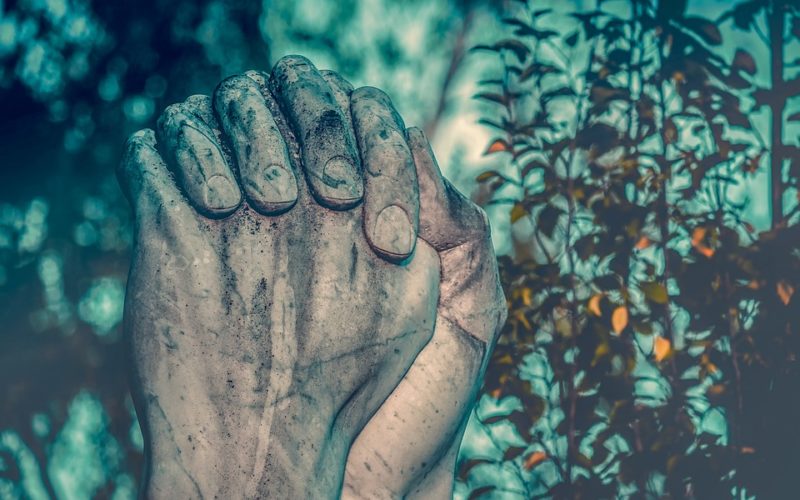
Minor Disagreements
For much of human history, religious institutions have been the architects of social order — defining morality, shaping governance, and drawing the boundaries of who belongs and who does not. Yet something significant has shifted over the past century. Societies that were once bound by a single dominant faith are now navigating a world of plural beliefs, spiritual scepticism, and growing calls for mutual respect. The question is no longer simply what people believe, but how they relate to those whose beliefs differ from their own.
A history of intolerance
The story of organised religion is, in many ways, a story of exclusion. The Crusades, the Spanish Inquisition, the partition of India — history offers no shortage of examples where religious difference translated into violence, displacement, and oppression. For centuries, tolerance was not a virtue to be cultivated but a threat to be suppressed. Orthodoxy demanded conformity, and deviation was met with punishment. These were not aberrations. They were, for a long time, the norm.
What changed?
The Enlightenment planted the first serious seeds of religious pluralism in Western thought. Philosophers such as John Locke argued that the state had no legitimate authority over matters of private conscience. This laid the groundwork for secular governance and, eventually, legal protections for religious minorities. The horrors of the 20th century — particularly the Holocaust — further galvanised international efforts to protect freedom of belief. The Universal Declaration of Human Rights, adopted in 1948, enshrined religious freedom as a fundamental right for all people.
The role of secularisation
As formal religious observance has declined across much of Europe and the Western world, attitudes towards religious diversity have, paradoxically, become more accepting. Research consistently shows that people with no religious affiliation tend to express higher levels of tolerance towards other faiths. This is not simply a matter of indifference. Secularisation has prompted many people to approach religion as a cultural or personal matter rather than an absolute truth, making space for coexistence rather than competition.
Where tolerance still falls short
Progress, however, is far from universal. Religious persecution remains widespread across the globe. Minority communities — from Uyghur Muslims in China to Christians in parts of sub-Saharan Africa — continue to face discrimination, violence, and state-sponsored repression. Even in liberal democracies, rising nationalism has fuelled hostility towards religious minorities, particularly Muslim communities. Tolerance, it turns out, is not a destination but a practice — one that requires active effort and political will to maintain.
Interfaith dialogue as a tool for change
One of the most promising developments in recent decades has been the growth of interfaith dialogue. Organisations such as the Parliament of the World's Religions bring together representatives from hundreds of traditions to identify shared values and build relationships across difference. At the local level, community initiatives — shared meals, joint charitable projects, open days at places of worship — are quietly dismantling the suspicion that tends to fester in the absence of contact. These exchanges do not require participants to abandon their beliefs. They simply ask them to listen.
Looking ahead
Religious tolerance is not the same as religious relativism. It does not demand that all beliefs be treated as equally valid or that critical scrutiny be abandoned. What it does require is a commitment to human dignity — a recognition that people of different faiths, or no faith at all, are entitled to hold their convictions without fear. The shift from rigid rituals of exclusion to open-minded engagement is neither complete nor inevitable. But it is underway, and understanding how it happens is essential for anyone who cares about the kind of societies we are building.